Studio City · LA City (LADBS)
Studio City New Construction — Hillside Custom Homes & Premium Residential
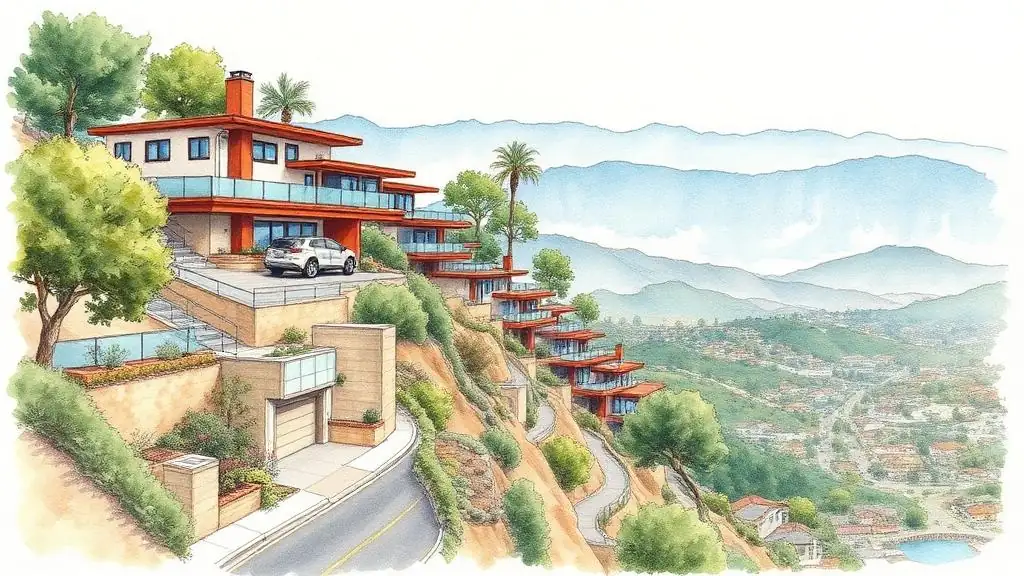
Studio City sits inside the City of Los Angeles, so ground-up homes — Studio City flats near Ventura, the Colfax Meadows blocks, and the south-of-Boulevard hillside parcels climbing into Laurel Canyon and Fryman — are permitted through LADBS with the Hillside Ordinance applying to most slope-area lots.
CSLB #1156772 · License & insurance details on request
Quick Answer
If you are planning a Studio City hillside custom home, feasibility should answer two questions before design: what does access actually allow for construction logistics, and what does the Hillside Ordinance say about grading quantity and fire-access width on this specific parcel. Both routinely set the envelope before architectural intent does — and both belong in writing before any contract.
Who this is for
- Homeowners planning a hillside custom home in Laurel Canyon or Fryman.
- Owners weighing a custom home on the Colfax Meadows or Studio City flats blocks.
- Buyers under contract on a steep, narrow-access lot who want feasibility before closing.
- Owners considering a teardown-rebuild on a tight-access slope parcel.
Who reviews new construction in Studio City?
Studio City is part of the City of Los Angeles. Building permits, plan-check, and inspections run through LADBS; zoning and entitlements run through LA City Planning. There is no separate 'City of Studio City' department.
Most Studio City hillside parcels sit inside the City's Hillside Ordinance area, which triggers grading limits, fire-access width requirements, and hillside-specific structural and drainage review. Flats parcels along Ventura and the Colfax Meadows blocks typically follow standard R-1 review.
What ground-up projects suit Studio City
Hillside custom homes
Slope parcels climbing into Laurel Canyon and Fryman — caissons, retaining, drainage, hillside review.
Tight-access slope teardown-rebuilds
Demolition + ground-up on narrow-street parcels with constrained staging.
Premium custom homes (flats)
Ground-up R-1 residences on Colfax Meadows and similar flats blocks.
Luxury rebuilds
High-finish replacement of mid-century structures on view-corridor lots.
Local constraints that shape Studio City budgets and schedules
The Hillside Ordinance sets grading-quantity caps, retaining height limits, fire-access width requirements, and slope-stability evidence thresholds. Combined with the City's stormwater rules, this drives meaningful engineering scope on every slope parcel.
Narrow canyon streets create logistics constraints that are easy to underestimate: crane day-rate access, small-truck deliveries, hauling restrictions, and limited on-street staging. Build a written logistics plan into feasibility.
View-corridor and ridgeline considerations apply on prominent lots. They are usually a design conversation, not a hard veto — but they belong in the feasibility narrative.
Cost factors specific to Studio City
Hillside foundations (caisson + grade beam, retaining): typically 15–40% over flat-lot equivalents depending on slope and soils.
Tight-access staging premium: crane day rates, small-truck delivery surcharges, longer haul times — line-item separately.
Premium-finish envelopes on view lots: meaningfully above mainstream LA custom-home ranges.
Title 24 compliance under the 2025 Energy Code is baseline.
Permit and timeline reality in Studio City
Hillside-parcel kickoff-to-permit envelopes are measured in many months. Geotech turnaround, hillside-grading review, fire-access sign-off, and plan-check corrections cycles all add time on top of standard R-1 review.
Flats parcels move closer to standard LA custom-home windows but still benefit from clean first submittals. Permit Timeline guidance lives on /new-construction/permit-timeline.
Engineering you will actually need
Geotech with slope-stability analysis and foundation recommendations for hillside parcels.
Drainage and erosion-control plan satisfying City stormwater requirements.
Structural design for caisson / grade-beam foundations and the lateral system that suits soils and seismic profile.
Title 24 energy compliance under the 2025 California Energy Code.
Fire-access compliance documentation including driveway geometry and any required turnaround.
Risks and bottlenecks unique to Studio City
Fire-access width surprises
Required access width can reduce the buildable envelope or force a driveway turnaround. Confirm in feasibility.
Slope-stability findings
New geotech can change foundation scope materially. Treat slope-stability sign-off as a critical-path item.
Staging on narrow streets
Some Laurel Canyon blocks require small-truck deliveries and choreographed crane days.
View-corridor pushback
Prominent lots can attract design-review attention even without a formal historic or design-overlay trigger.
Frequently asked questions
- Does LADBS handle my Studio City hillside permit?
- Yes. Studio City is inside the City of Los Angeles, so LADBS issues permits and LA City Planning handles zoning and hillside review. There is no separate Studio City department.
- What is the Hillside Ordinance and does it apply to my lot?
- It is the City's framework that adds grading limits, fire-access width minimums, and hillside-specific structural and drainage review to slope-area parcels. Most Studio City canyon parcels sit inside it — confirm on ZIMAS before assuming otherwise.
- Do I need caisson foundations?
- Often, on steeper Studio City slopes. The honest answer comes from a current geotech report — not from a prior report on a neighboring lot. Treat geotech as required, not optional, on slope parcels.
- How much does access add to my build cost?
- On narrow canyon streets, access can add six figures in logistics — crane day rates, small-truck deliveries, hauling restrictions. A cost estimate that ignores access is incomplete; we model it during feasibility.
- How long until permit issuance for a Studio City hillside?
- Many months — measured by geotech turnaround, hillside-grading review, fire-access sign-off, and correction cycles. Flats parcels move closer to standard LA windows. Feasibility sets the honest per-parcel range.
- Can I do a teardown-rebuild on a tight-access lot?
- Yes, but logistics and demo planning matter more than they do on a wide-street parcel. We model staging, demo access, and crane days in feasibility — those decisions should not surface during construction.
- Why do Studio City hillside lots need a staging and access plan early?
- Many Studio City hillside streets are narrow with limited turnarounds and constrained driveways. Resolving staging, access, and neighbor-protection before design heads off complaints, work stops, and inspection delays once construction starts.
Official sources
- LADBS — Plan Check and Permitting ↗
LA Department of Building & Safety
Permit and inspection authority for City of LA parcels.
- LA City Planning — Hillside & Zoning ↗
Los Angeles City Planning
Hillside Ordinance, entitlement, and zoning guidance.
- California Geological Survey — Seismic & Landslide Zones ↗
California Geological Survey
Seismic-hazard and landslide-zone confirmation for hillside parcels.
- California Energy Commission — Building Energy Efficiency ↗
California Energy Commission
2025 Title 24 Part 6 energy code requirements.
- California Building Standards Commission ↗
California Building Standards Commission
Adopted statewide building, residential, and CalGreen codes.
Related pages
- LADBS hillside ordinance for Studio City →
How City-of-LA hillside permits actually move.
- Studio City slope and drainage review →
Slope, geotech, drainage, access engineering.
- Custom homes on Studio City hillside lots →
Design-build for hillside custom delivery.
- Premium scope on Studio City hillside lots →
Finish stack and consultant breadth.
- Studio City hillside cost drivers →
2026 ranges with named drivers.
- LADBS permit-path timeline for Studio City →
Realistic schedule, feasibility through C of O.
Review hillside, access, and staging constraints for your Studio City lot
We start every ground-up engagement with a written preconstruction feasibility review — before any contract is signed.
Review hillside, access, and staging constraints for your Studio City lot