Malibu · City of Malibu / California Coastal Commission
Malibu New Construction — Coastal Custom Homes, Hillside & Fire Rebuild
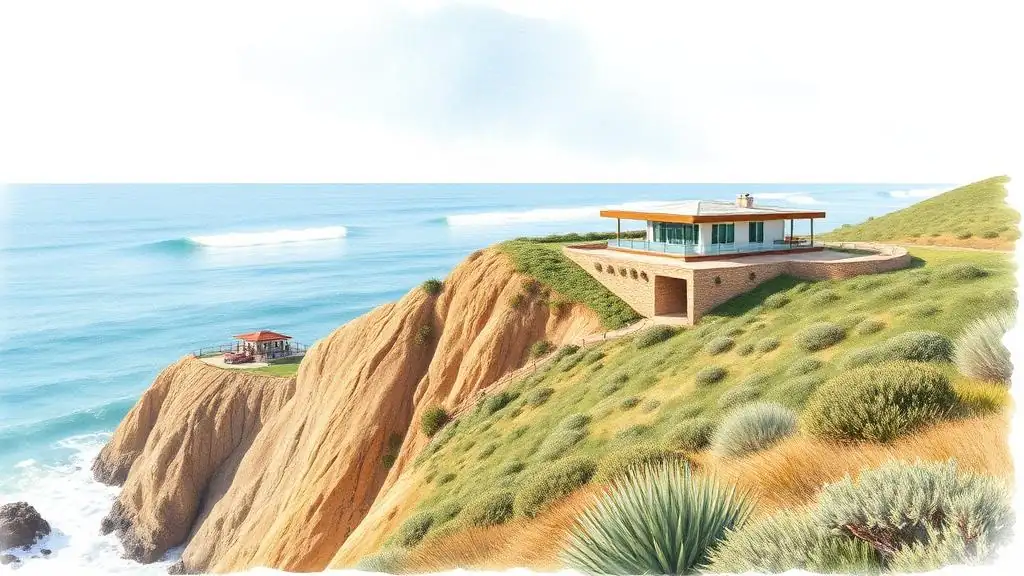
Malibu is its own incorporated city. Most parcels sit inside the California Coastal Zone, most sit inside the Very High Fire Hazard Severity Zone, many are hillside, and many use on-site wastewater (septic) rather than sewer — so ground-up homes carry a stack of constraints that has to be sequenced correctly in feasibility.
CSLB #1156772 · License & insurance details on request
Quick Answer
If you are planning a Malibu custom home or rebuild, the first feasibility deliverables are: confirm City of Malibu jurisdiction vs LA County for the parcel, identify whether a Coastal Development Permit (CDP) is required and on what path, confirm WUI envelope obligations, and confirm wastewater approach (septic or sewer). Each of these can change the design, the schedule, and the budget.
Who this is for
- Owners rebuilding after a Malibu-area wildfire event.
- Homeowners planning a coastal-edge or bluff-adjacent custom home.
- Hillside owners in Malibu's slope areas.
- Buyers under contract on a Malibu lot who want feasibility before closing.
Who reviews new construction in Malibu?
Incorporated City of Malibu parcels are reviewed by the City of Malibu's Building Safety Division and Planning Department. Coastal-Zone parcels also touch the California Coastal Commission's framework via the City's certified Local Coastal Program (LCP), with appeals possible to the Commission in defined cases.
Some Malibu-area addresses are actually unincorporated LA County (e.g. parts of the Santa Monica Mountains outside city limits). Confirm jurisdiction on the parcel record before any other assumption — LA County reviews unincorporated parcels.
What ground-up projects suit Malibu
Coastal-edge custom homes
Bluff-adjacent or beach-fronting parcels under CDP review and stricter envelope rules.
Hillside custom homes
Slope-area parcels in the Santa Monica Mountains with geotech, retaining, and drainage scope.
Fire rebuilds
Replacement of fire-affected structures, with WUI compliance and (in many cases) septic redesign.
Teardown rebuilds
Removal of aging structures followed by current-code design under City of Malibu (or LA County for unincorporated) jurisdiction.
Local constraints that shape Malibu budgets and schedules
Coastal-Zone rules constrain envelope, height, view-corridor preservation, and bluff setbacks. Beach-fronting and bluff parcels have additional geotechnical requirements (e.g. wave runup analysis or bluff stability) that drive engineering scope.
Most parcels sit in the Very High Fire Hazard Severity Zone, triggering CBC Chapter 7A WUI requirements (ignition-resistant cladding, ember vents, tempered glazing). Defensible space is required and is enforced.
On-site wastewater (septic) is common. Septic design, soils suitability, and (where required) Onsite Wastewater Treatment System review can shape both the home's footprint and the buildable area on the lot.
Cost factors specific to Malibu
Coastal-Zone review (CDP) adds permit time and can require architectural revisions.
Bluff-stability or wave-runup studies on coastal-edge parcels add engineering scope.
WUI envelope upgrades: $30–$70/sq ft over standard envelope.
Septic system (design + construction) is a meaningful line item compared to a sewer connection.
Hillside foundations and retaining on slope parcels: 15–35%+ over flat-lot equivalents.
Permit and timeline reality in Malibu
CDP processing under the City's LCP adds time to the front end, and the appeal window adds risk on visible coastal-edge designs. Hillside and septic coordination further extend the design-permit cycle.
Realistic full design-build cycles are measured in many months and frequently longer for coastal-edge or slope parcels. We do not quote a single number — feasibility ties the range to the specific parcel.
Engineering you will actually need
Geotech with slope-stability analysis on hillside parcels; bluff-stability or wave-runup study on bluff or beach-fronting parcels.
Drainage and erosion control per City and Coastal stormwater requirements.
WUI compliance package (CBC Chapter 7A) on VHFHSZ parcels.
Septic / OWTS design where applicable, with soils suitability.
Title 24 energy compliance under the 2025 California Energy Code.
Risks and bottlenecks unique to Malibu
Coastal appeals
Appealable CDPs add schedule risk on visible coastal-edge designs. Plan the design narrative early.
Jurisdiction confusion
Some Malibu-area addresses are unincorporated LA County, not City of Malibu. Always confirm.
Septic limitations
OWTS suitability can limit footprint and bedroom count regardless of zoning envelope.
Fire and slope movement
Post-fire slope behaviour in the Santa Monica Mountains can change soils condition. Always commission new geotech.
Frequently asked questions
- Does the City of Malibu always review my project?
- Only if the parcel is inside the incorporated city. Some Malibu-area addresses are unincorporated LA County and are reviewed by LA County. Confirm jurisdiction on the parcel record before any other assumption.
- Do I need a Coastal Development Permit?
- Most City of Malibu ground-up projects do. The City processes CDPs under its certified Local Coastal Program. Some designs face appeal to the California Coastal Commission. Plan for the CDP timeline in the schedule.
- What WUI requirements apply?
- If the parcel is inside the Very High Fire Hazard Severity Zone (most are), Chapter 7A applies — ignition-resistant cladding, ember-resistant vents, tempered glazing, eave detailing, and defensible space.
- Is septic required or is sewer available?
- Most Malibu parcels use on-site wastewater (septic / OWTS). Sewer is the exception. Septic design influences footprint and bedroom count, so it belongs in feasibility.
- What does a bluff-adjacent design cost?
- Materially more than a typical custom home — bluff-stability studies, foundation engineering, view-corridor architectural work, and Coastal review all stack. Honest ranges live on /new-construction/cost; the per-parcel range comes out of feasibility.
- How long is the full design-build cycle?
- Measured in many months and frequently longer for coastal-edge, hillside, or septic-constrained parcels. Realistic timelines depend on parcel complexity and CDP path — see /new-construction/permit-timeline.
- What if I am rebuilding after a wildfire?
- Like-for-like recovery paths can move faster than a revised design, but Coastal, WUI, and septic constraints still apply. Treat 'fast' as a recovery-path question, not a default expectation.
- Why do Malibu projects often involve septic and onsite-wastewater planning?
- Many Malibu lots are not on municipal sewer and rely on onsite wastewater treatment systems with their own siting, slope, and percolation constraints. Coordinating wastewater planning with bluff geotech and coastal review during feasibility avoids late-stage redesigns.
Official sources
- City of Malibu — Building Safety ↗
City of Malibu
Permit and inspection authority for incorporated Malibu parcels.
- City of Malibu — Planning ↗
City of Malibu
Local Coastal Program, CDPs, and zoning resources.
- California Coastal Commission ↗
California Coastal Commission
Coastal Zone framework and appeal jurisdiction.
- CAL FIRE — Fire Hazard Severity Zones ↗
CAL FIRE / OSFM
Parcel-level VHFHSZ confirmation for WUI compliance.
Related pages
- City of Malibu is independent of LADBS →
Why City-of-LA permitting does not apply here.
- Estate-class scope on Malibu bluff lots →
Finish stack and consultant breadth.
- Bluff slope, geotech, drainage review for Malibu →
Slope, geotech, drainage, access engineering.
- Fire-rebuild planning for Malibu lots →
Post-loss feasibility and code-cycle implications.
- Malibu coastal-bluff cost drivers →
2026 ranges with named drivers.
- City of Malibu permit-path expectations →
Realistic schedule, feasibility through C of O.
Plan a Malibu bluff-lot feasibility around coastal, fire, and geotech constraints
We start every ground-up engagement with a written preconstruction feasibility review — before any contract is signed.
Plan a Malibu bluff-lot feasibility around coastal, fire, and geotech constraints