La Cañada Flintridge · City of LCF
La Cañada Flintridge New Construction — Foothill Custom Homes, Hillside & WUI
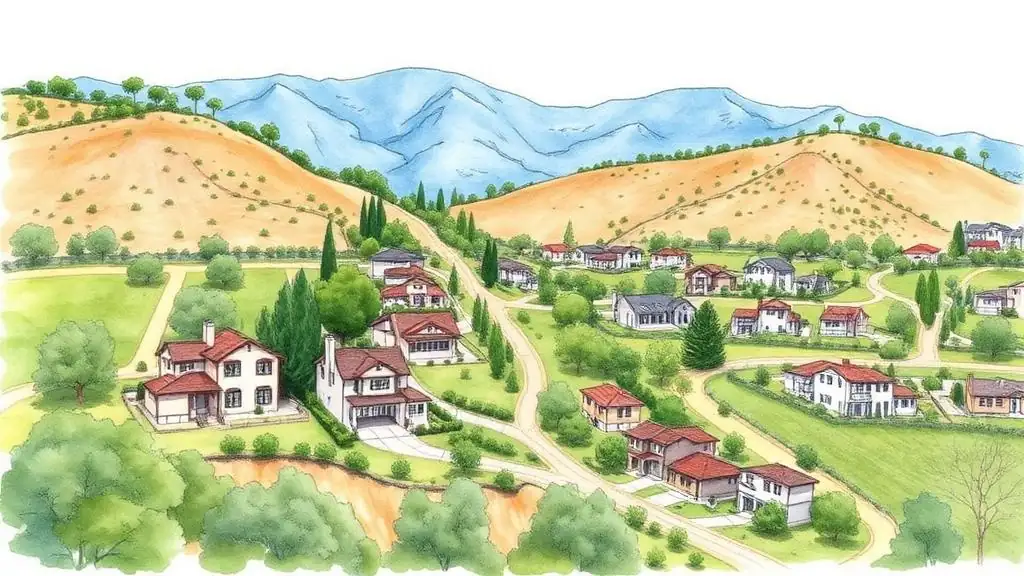
La Cañada Flintridge is an independent foothill city with its own Community Development Department — LADBS and LA County DPW do not issue permits here. Ground-up work is mostly foothill and hillside custom homes, with geotech, drainage, fire-access, and Chapter 7A ignition-resistant construction driving the real budget and schedule.
CSLB #1156772 · License & insurance details on request
Quick Answer
If you are planning an LCF custom home, feasibility has to clear three realities: the City of La Cañada Flintridge review process and its hillside / view / neighborhood-context standards; the parcel-specific geotech and drainage scope on a foothill lot; and the CAL FIRE / OSFM Fire Hazard Severity Zone designation, which drives Chapter 7A construction. We put all three in writing before contract.
Who this is for
- Owners planning a ground-up custom home on an LCF foothill or hillside lot.
- Owners considering a teardown-rebuild of an aging LCF foothill home.
- Buyers under contract on an LCF parcel who want feasibility before closing.
- Architects coordinating a high-finish LCF residential delivery.
Who reviews new construction in La Cañada Flintridge?
The City of La Cañada Flintridge is an independent LA-County jurisdiction. Building permits, plan-check, and inspections run through LCF Community Development; zoning, entitlements, and hillside review run through LCF Planning. LADBS and LA County DPW have no role.
Significant portions of LCF sit within CAL FIRE / OSFM Fire Hazard Severity Zones (Very High or High), which trigger California Building Code Chapter 7A ignition-resistant construction. Confirm the parcel-level FHSZ designation early — it is a material envelope-cost driver, not a finish detail.
What ground-up projects suit La Cañada Flintridge
Foothill custom homes
Ground-up R-1 residences on the LCF foothill and flatter-grade lots.
Hillside custom homes
Slope parcels requiring caisson or pier-and-grade-beam foundations, retaining, and drainage work.
Teardown rebuilds
Demolition of aging foothill homes followed by current-code Chapter 7A-compliant rebuilds.
Luxury estate custom homes
High-finish ground-ups on premium LCF lots, coordinated with hillside and fire-access realities.
Local constraints that shape La Cañada Flintridge budgets and schedules
Hillside lots carry grading-quantity limits, retaining-wall criteria, fire-access width minimums, and stricter drainage review. Slope, soils, and access combine to drive structural and geotechnical scope; assume geotech is on the critical path of feasibility.
Chapter 7A applies to FHSZ parcels: Class A roof, ignition-resistant walls and eaves, ember-resistant vents, defensible-space coordination. These are construction-type requirements, not optional upgrades.
Neighborhood-context and view considerations affect massing on certain LCF streets. Confirm in feasibility — design changes after permit are expensive.
Cost factors specific to La Cañada Flintridge
Hillside foundations, retaining, and drainage on slope parcels can add 15–35% over a flat-lot foundation depending on soils and slope.
Chapter 7A ignition-resistant materials are a meaningful line item — line it separately from the build number.
Geotech investigation (borings, lab work, report) is a real preconstruction line item, not an afterthought.
Premium-finish envelopes on LCF luxury lots sit above mainstream custom-home ranges.
Title 24 compliance under the 2025 Energy Code is baseline.
Permit and timeline reality in La Cañada Flintridge
Realistic kickoff-to-permit envelopes for an LCF ground-up are measured in many months once schematic design, geotech, hillside / fire review, and LCF plan-check corrections are sequenced honestly. Hillside parcels usually extend further.
Clean, fully coordinated first submittals materially reduce correction cycles. LCF's plan-check cadence is independent of LADBS.
Engineering you will actually need
Geotechnical investigation with slope-stability where applicable; landslide-zone confirmation per CGS.
Structural design appropriate to soils, seismic context, and any hillside conditions (caissons, retaining).
Drainage / stormwater / erosion-control to LCF standards.
WUI / Chapter 7A documentation on FHSZ parcels.
Title 24 energy compliance under the 2025 California Energy Code.
Risks and bottlenecks unique to La Cañada Flintridge
Skipping geotech in feasibility
On a foothill or hillside lot, geotech is the largest single feasibility unknown. Defer it and the schedule slips.
Ignoring FHSZ designation
Chapter 7A is not optional on Very High or High FHSZ parcels and materially changes envelope cost.
Underbudgeting fire-access work
Width minimums, turn-arounds, and access grades can require driveway and site work on top of the building.
Importing LADBS assumptions
LCF has its own correction cadence and design-review expectations.
Frequently asked questions
- Does LADBS or LA County handle my La Cañada Flintridge permit?
- Neither. LCF is an independent LA-County jurisdiction with its own Community Development Department.
- Is my LCF parcel in a Fire Hazard Severity Zone?
- Significant portions of LCF are in CAL FIRE / OSFM FHSZ (Very High or High). Confirm the parcel-level designation early — it materially shapes envelope cost.
- How much do hillside foundations add to cost?
- A reasonable planning band is 15–35% over a flat-lot foundation, driven by slope, soils, retaining, and access. Geotech sharpens the range — we publish honest ranges and refine per-parcel.
- What does Chapter 7A actually require?
- Class A roof assemblies, ignition-resistant exterior walls and eaves, ember-resistant vents, and detailing aligned with CBC Chapter 7A. It is construction-type requirement on FHSZ parcels.
- How long does the permit phase take?
- Realistic envelopes are measured in many months. Hillside / WUI parcels usually extend further. Clean first submittals compress corrections.
- Will the City require design-review changes?
- It depends on neighborhood context, view, and massing. Engage the City's review function early to avoid late-stage design revisions.
- Why do LCF foothill lots need drainage and debris-flow review at feasibility?
- LCF sits at the toe of the San Gabriel foothills with documented debris-flow history. A drainage and geotech screen at feasibility clarifies grading, foundation type, and detention requirements before architecture begins.
Official sources
- City of La Cañada Flintridge — Community Development ↗
City of La Cañada Flintridge
Permit, plan-check, and inspection authority for LCF parcels.
- CAL FIRE / OSFM — Fire Hazard Severity Zones ↗
CAL FIRE / OSFM
Parcel-level VHFHSZ confirmation for WUI / Chapter 7A compliance.
- California Geological Survey — Seismic & Landslide Zones ↗
California Geological Survey
Seismic-hazard and landslide-zone confirmation for hillside parcels.
- California Energy Commission — Building Energy Efficiency ↗
California Energy Commission
2025 Title 24 Part 6 energy code requirements.
- California Building Standards Commission ↗
California Building Standards Commission
Adopted statewide building, residential, and CalGreen codes.
Related pages
- City of La Cañada Flintridge is independent of LADBS →
Why City-of-LA permitting does not apply here.
- LCF foothill WUI and brush-clearance rules →
Chapter 7A ignition-resistant assemblies.
- LCF foothill slope and drainage review →
Slope, geotech, drainage, debris-flow context.
- Custom homes on LCF foothill lots →
Design-build for one-off foothill delivery.
- LCF foothill cost ranges and drivers →
2026 ranges with named drivers.
- City of LCF permit-path expectations →
Realistic schedule, feasibility through C of O.
Screen your LCF foothill lot for WUI, drainage, and review path
We start every ground-up engagement with a written preconstruction feasibility review — before any contract is signed.
Screen your LCF foothill lot for WUI, drainage, and review path