Hollywood Hills · LA City (LADBS) Hillside
Hollywood Hills New Construction — Hillside Custom Homes
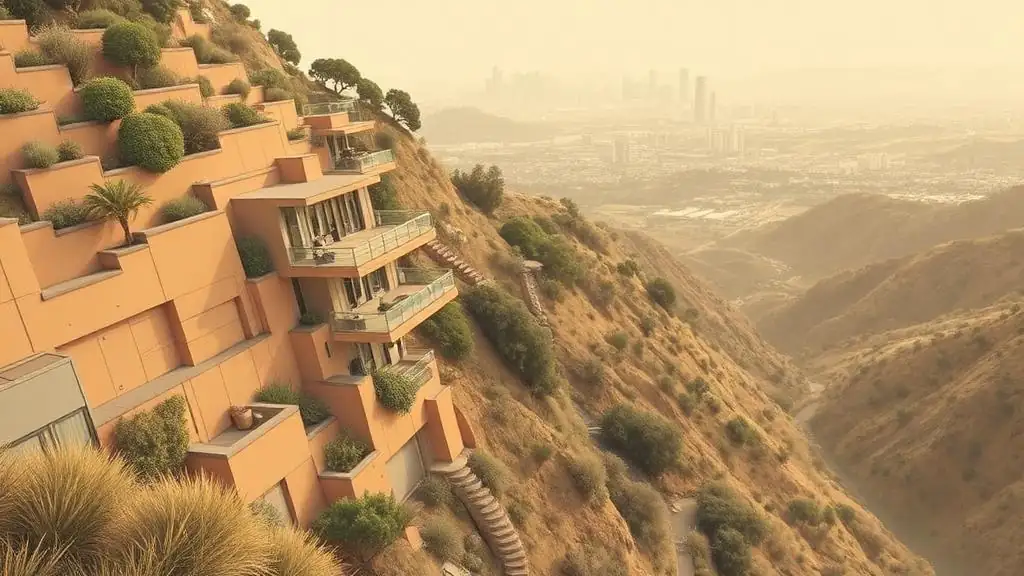
The Hollywood Hills sit inside the City of Los Angeles, almost entirely inside the Hillside Ordinance area, and largely inside the Very High Fire Hazard Severity Zone. Ground-up homes here are hillside engineering projects first — slope, soils, access, drainage, and fire-access dimensions usually drive the design and the budget more than architecture does.
CSLB #1156772 · License & insurance details on request
Quick Answer
If you are planning a Hollywood Hills custom home, the first feasibility outputs are slope, soils, drainage, and access — not square footage. Hillside Ordinance grading limits, fire-access widths, WUI envelopes, and (for narrow-road parcels) staging realities set the budget. A written feasibility review answers these before architectural fees start.
Who this is for
- Homeowners planning a hillside custom home in the Hollywood Hills.
- Owners weighing a teardown-rebuild on a slope-area parcel.
- Buyers under contract who want feasibility before closing on a hillside lot.
- Owners whose architect needs a structural and geotech reality check.
Who reviews new construction in the Hollywood Hills?
The Hollywood Hills are part of the City of Los Angeles. Permits and plan-check run through LADBS; zoning and entitlements run through LA City Planning. The Hillside Ordinance applies to nearly all parcels and most sit inside the Very High Fire Hazard Severity Zone.
Hillside review covers grading limits, fire-access widths and turnarounds, retaining design, and slope-stability sign-off. WUI compliance under CBC Chapter 7A applies on VHFHSZ parcels.
What ground-up projects suit the Hollywood Hills
Hillside custom homes
Ground-up R-1 residences on slope parcels with bespoke design.
Teardown rebuilds
Replacement of an aging hillside structure with a current-code custom home.
Complex hillside engineering projects
Parcels where caissons, retaining, and drainage dominate the design conversation.
Local constraints that shape Hollywood Hills budgets and schedules
The Hillside Ordinance caps how much earth can move, requires fire-access widths and turnarounds, and adds slope-stability sign-off. Narrow, gated, or sub-standard-width streets can rule out some construction logistics regardless of how the architecture looks on paper.
WUI envelope requirements apply on VHFHSZ parcels and change material selection (ignition-resistant cladding, ember-resistant vents, tempered glazing). Defensible space is required.
Soils condition varies meaningfully across the Hills. Geotech is mandatory and the cost-of-foundation swings significantly based on soils, slope, and the lateral-system the engineer specifies.
Cost factors specific to the Hollywood Hills
Hillside foundations (caisson + grade beam + retaining): commonly 20–40%+ over flat-lot equivalents.
WUI envelope upgrades on VHFHSZ parcels: $30–$70/sq ft over standard envelope.
Site access and staging on narrow Hills roads add logistics cost — small-truck deliveries, crane day rates, longer haul times.
Drainage and erosion-control scope is real on slope parcels — not a checkbox.
Permit and timeline reality in the Hollywood Hills
Geotech, hillside review, and (for VHFHSZ) WUI coordination extend the front end. Realistic full design-permit cycles are measured in many months. Construction phases are longer than flat-lot equivalents because foundation and slope-stabilization scope is genuinely larger.
First-submittal completeness is the dominant lever on schedule. Coordinated architectural + structural + geotech + drainage + energy packages reduce correction cycles materially.
Engineering you will actually need
Geotech with slope-stability analysis and foundation recommendations.
Caisson or grade-beam foundation design suited to soils and seismic profile.
Retaining-wall design for cut-and-fill conditions.
Drainage and erosion-control plan per City stormwater requirements.
WUI compliance package on VHFHSZ parcels.
Title 24 energy compliance under the 2025 California Energy Code.
Risks and bottlenecks unique to the Hollywood Hills
Access realities
Some Hills parcels physically cannot support large cranes or trucks. Logistics belongs in feasibility.
Slope movement events
Heavy rain seasons can change slope behaviour and trigger re-evaluation.
Fire-access width
Sub-standard streets and shared driveways can require improvements not all owners can deliver.
Late envelope changes
Adjusting the envelope after hillside engineering is locked is the most common source of budget surprise.
Frequently asked questions
- Is my Hollywood Hills lot inside the Hillside Ordinance area?
- Nearly all Hollywood Hills parcels are. The LADBS Zone Information Map and LA City Planning portal confirm the overlay for your specific parcel.
- Are Hollywood Hills parcels in a Fire Hazard Severity Zone?
- Most are. Parcels in and adjacent to the Hills frequently sit inside the Very High Fire Hazard Severity Zone, which triggers Chapter 7A WUI requirements. Check the CAL FIRE FHSZ map for the specific parcel.
- Will I need caissons?
- Possibly — geotech and slope geometry drive foundation type. Plan for the possibility on aggressive slopes.
- What's the realistic hillside cost premium?
- Foundations, retaining, and drainage commonly add 20–40%+ over a flat-lot equivalent on aggressive slopes; combined with WUI envelope upgrades the total premium can be substantial. See /new-construction/cost for current ranges.
- Can the lot actually support construction logistics?
- Not every parcel can — narrow access, gate constraints, and limited turnaround space can rule out cranes and large deliveries. Confirm logistics in feasibility, not in construction planning.
- How long is the design-build cycle?
- Many months. Hillside and WUI coordination extend the front end; foundation and slope-stabilization scope extends construction. See /new-construction/permit-timeline.
- Do fire-access width rules really apply to my street?
- Yes. LAFD and the Hillside Ordinance enforce minimum widths and turnarounds. Sub-standard streets or shared driveways can require improvements that affect feasibility.
- Why do Hollywood Hills new builds need a staging and neighbor-protection plan early?
- Many Hollywood Hills streets are narrow with limited turnarounds and protected neighbor views and trees. A staging and neighbor-protection plan early in design heads off complaints, work stops, and inspection delays once construction starts.
Official sources
- LADBS — Plan Check and Permitting ↗
LA Department of Building & Safety
Authoritative permit and inspection portal for City of LA parcels.
- LA City Planning — Hillside Ordinance ↗
Los Angeles City Planning
Hillside Ordinance application areas, grading limits, and fire-access rules.
- CAL FIRE — Fire Hazard Severity Zones ↗
CAL FIRE / OSFM
Parcel-level VHFHSZ confirmation for WUI compliance.
- California Building Standards Commission — 2022/2025 CBC ↗
California Building Standards Commission
Chapter 7A WUI building standards.
Related pages
- Hollywood Hills slope and drainage review →
Slope, geotech, drainage, access engineering.
- LADBS hillside ordinance and BHO context →
How City-of-LA hillside permits move.
- Custom homes on Hollywood Hills lots →
Design-build for hillside custom delivery.
- Geotech and drainage for narrow access lots →
Soils, slope, stormwater.
- Hillside permit-path realistic timeline →
Schedule, feasibility through C of O.
- Hollywood Hills teardown-rebuild path →
Demo + rebuild on a hillside lot.
Review hillside structure, staging, and drainage before design
We start every ground-up engagement with a written preconstruction feasibility review — before any contract is signed.
Review hillside structure, staging, and drainage before design