Hancock Park · LA City (LADBS) + HPOZ
Hancock Park New Construction — Historic-District Custom Homes & Sensitive Rebuilds
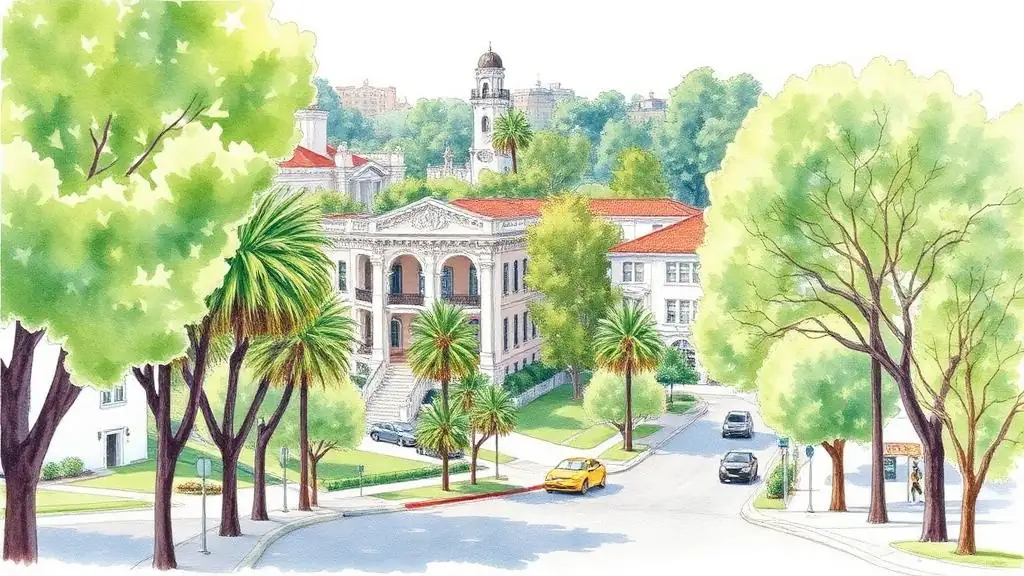
Hancock Park sits inside the City of Los Angeles, so building permits run through LADBS — but most of the neighborhood is also inside the Hancock Park HPOZ (Historic Preservation Overlay Zone), administered by LA City Planning's Office of Historic Resources. That means ground-up work and significant rebuilds in Hancock Park are not a pure R-1 conversation; they are an HPOZ design-review conversation first, with permit clearance only after design approval.
CSLB #1156772 · License & insurance details on request
Quick Answer
If you are planning new construction or a significant rebuild in Hancock Park, feasibility has to start with the HPOZ. Is the existing structure a Contributing or Non-Contributing element under the HPOZ Preservation Plan, and what does the Plan's design framework allow on your parcel? The HPOZ decision shapes whether your project is a sympathetic addition, a Conformance-required rebuild, or — rarely — a fully new house. We put this in writing before any design fees are committed.
Who this is for
- Owners planning a sympathetic ground-up home on a Hancock Park lot.
- Owners considering a major addition or selective rebuild within HPOZ rules.
- Buyers under contract on a Hancock Park parcel who want HPOZ feasibility before closing.
- Architects coordinating an HPOZ-compliant high-finish residential project.
Who reviews new construction in Hancock Park?
Hancock Park is part of the City of Los Angeles. Building permits, plan-check, and inspections run through the Los Angeles Department of Building and Safety (LADBS). Zoning, entitlements, and historic review run through LA City Planning, including the Office of Historic Resources.
The Hancock Park HPOZ is administered under the City's HPOZ ordinance and the neighborhood's adopted Preservation Plan. Most exterior work — including ground-up rebuilds — requires Certificate of Appropriateness (or Conformance) review under the Preservation Plan before a building permit is issued. That review is not optional, and the standards are not aesthetic preferences — they are documented design rules.
What ground-up projects suit Hancock Park
Sympathetic ground-up homes
On Non-Contributing parcels, current-code ground-up homes designed to the HPOZ Preservation Plan's framework.
Major sympathetic additions
On Contributing structures, character-preserving additions that meet Preservation Plan standards.
Selective rebuilds with preserved façades
Where the Preservation Plan supports it, selective rebuilds that retain primary-elevation character.
High-finish interior reconfiguration
Where envelope and exterior are constrained, interior-focused high-finish work paired with sensitive exterior alterations.
Local constraints that shape Hancock Park budgets and schedules
The HPOZ Preservation Plan defines Contributing vs Non-Contributing status, allowed alterations, materials, fenestration patterns, roof pitches, and setbacks beyond the underlying zone. The plan is the starting point — not LA's general R-1 envelope rules.
Design review can add cycles. Pre-application coordination with HPOZ staff usually saves more time than it costs. Significant departures from the Preservation Plan attract higher-level review and longer timelines.
On established Hancock Park streets, staging, mature-tree protection, and neighbor coordination matter as much as construction-cost line items. Build a written staging plan into feasibility.
Cost factors specific to Hancock Park
HPOZ-compliant materials and craftsmanship (real wood windows, plaster systems, period-appropriate trim) sit meaningfully above off-the-shelf alternatives.
Design-review cycles can extend the schedule and may require revisions during plan-check.
Mature-tree protection, including protected species, can constrain foundation footprints and staging.
Title 24 compliance under the 2025 Energy Code applied to HPOZ-compatible envelopes requires careful detailing.
Permit and timeline reality in Hancock Park
Realistic kickoff-to-permit envelopes for Hancock Park work include HPOZ design review on top of LADBS plan-check, and are measured in many months. Pre-application engagement with HPOZ staff is normal practice and usually compresses the overall timeline.
Significant departures from the Preservation Plan extend the schedule. Conforming designs move faster than non-conforming ones — that is the honest tradeoff.
Engineering you will actually need
Soils review where the parcel or design warrants it; foundation design appropriate to soils and seismic context.
Structural design coordinated with the California Residential Code and any HPOZ-driven envelope decisions.
Title 24 energy compliance under the 2025 Energy Code, detailed for HPOZ-compatible wall and window assemblies.
Tree-protection plans where protected or significant trees are on or adjacent to the lot.
Stormwater / drainage per LA Public Works requirements.
Risks and bottlenecks unique to Hancock Park
Treating HPOZ as 'optional aesthetics'
It is a regulatory framework with documented standards. Designs that ignore it do not get built.
Specifying contemporary materials by default
HPOZ standards drive material and detailing choices. Spec sheets imported from non-HPOZ work create design-review cycles.
Underestimating craftsmanship lead times
Period-appropriate windows, plaster, and trim are not commodity items. Lead times affect schedule more than permits often do.
Mature-tree conflicts
Protected and significant trees can constrain foundations, staging, and even massing. Survey early.
Frequently asked questions
- Can I tear down and build a fully modern house in Hancock Park?
- Usually not. The Hancock Park HPOZ Preservation Plan governs alterations including new construction. Sympathetic, Plan-compliant designs are the realistic path; non-conforming designs face high-level review and rarely move forward as proposed.
- What does 'Contributing' vs 'Non-Contributing' mean for my project?
- It is the HPOZ classification of your structure under the Preservation Plan and it materially shapes what alterations are allowed. Contributing structures face stricter alteration rules; Non-Contributing parcels have more flexibility but still must conform to the Plan.
- Does the HPOZ apply if I am only doing interior work?
- Generally, the HPOZ governs exterior alterations and visible-from-public-right-of-way work. Confirm with HPOZ staff during feasibility — significant interior work that drives exterior changes still triggers review.
- How long does HPOZ review add to the schedule?
- It depends on scope and how cleanly the design conforms to the Preservation Plan. Pre-application engagement with HPOZ staff usually compresses the overall timeline more than it adds.
- Are HPOZ-compliant designs more expensive?
- Generally yes — period-correct materials and craftsmanship trades cost more. The honest tradeoff is that they also support neighborhood property values and avoid expensive redesigns.
- Who runs HPOZ review?
- LA City Planning's Office of Historic Resources, with input from the Hancock Park HPOZ Board, under the City's HPOZ ordinance and the Hancock Park Preservation Plan.
- How does Hancock Park's HPOZ affect a typical teardown-rebuild?
- Hancock Park is a designated HPOZ where demolition and significant exterior changes go through additional Office of Historic Resources review. A short HPOZ screen at feasibility clarifies whether teardown is realistic before architecture starts.
Official sources
- LADBS — Plan Check and Permitting ↗
LA Department of Building & Safety
Permit and inspection authority for City of LA parcels.
- LA City Planning ↗
Los Angeles City Planning
Zoning, entitlement, HPOZ, and Coastal Zone (within City of LA).
- LA City Planning — Office of Historic Resources / HPOZ ↗
Los Angeles City Planning
HPOZ design review for Hancock Park and other LA historic districts.
- California Energy Commission — Building Energy Efficiency ↗
California Energy Commission
2025 Title 24 Part 6 energy code requirements.
- California Building Standards Commission ↗
California Building Standards Commission
Adopted statewide building, residential, and CalGreen codes.
Related pages
- LADBS context for Hancock Park HPOZ lots →
How City-of-LA permits and HPOZ review interact.
- Custom homes on Hancock Park HPOZ lots →
Design-build for one-off historic-overlay delivery.
- Hancock Park teardown vs major-addition call →
HPOZ-aware demo + rebuild logic.
- Estate-class scope on Hancock Park lots →
Finish stack and consultant breadth.
- Hancock Park cost ranges and drivers →
2026 ranges with named drivers.
- Hancock Park permit-path with HPOZ review →
Realistic schedule, feasibility through C of O.
Plan a Hancock Park rebuild with HPOZ and tree-review screen
We start every ground-up engagement with a written preconstruction feasibility review — before any contract is signed.
Plan a Hancock Park rebuild with HPOZ and tree-review screen