Mill Valley · City of Mill Valley Planning & Building
Mill Valley New Construction — Hillside Custom Homes & North Bay Rebuilds
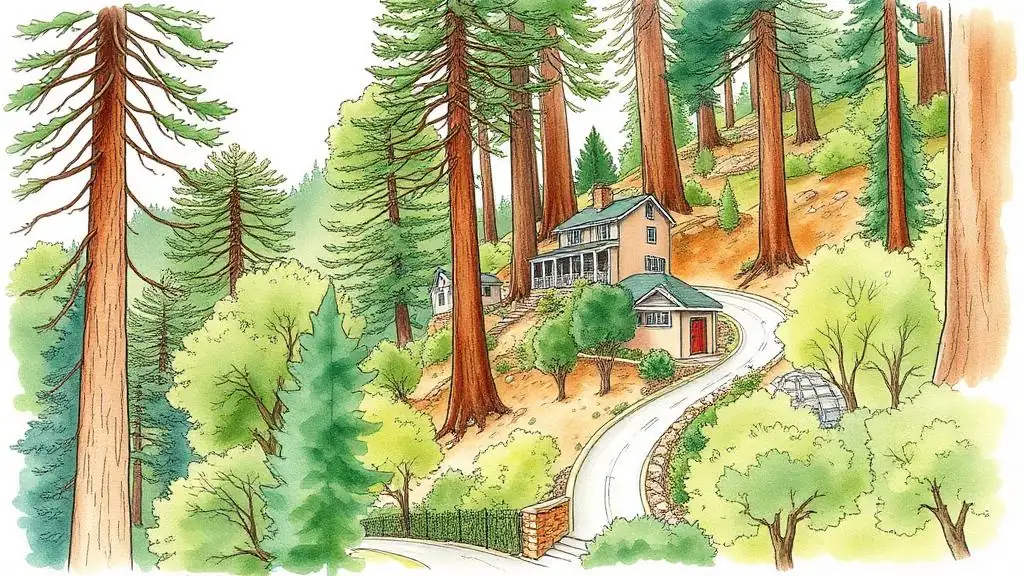
Mill Valley ground-up homes and rebuilds run through the City of Mill Valley Planning & Building Department on hillside, WUI-mapped, and access-constrained Marin County parcels. Slope geotech, drainage, Chapter 7A construction, and tight site logistics define both the engineering and the schedule.
CSLB #1156772 · License & insurance details on request
Quick Answer
If you are building or rebuilding in Mill Valley, feasibility must clear three things before architecture: a soils and slope-stability review for the parcel, the Fire Hazard Severity Zone status that triggers CBC Chapter 7A, and a realistic construction access and staging plan. All three reshape the design before owner intent enters.
Who this is for
- Owners planning a hillside custom home in Mill Valley.
- Owners rebuilding on a slope-constrained Mill Valley parcel.
- Buyers under contract on a Mill Valley hillside lot who need feasibility before close.
- Owners weighing rebuild against major remodel on a WUI-mapped parcel.
Who reviews new construction in Mill Valley?
Mill Valley is the City of Mill Valley. Planning, plan-check, building permits, and inspections all run through the City's Planning & Building Department for in-city parcels. Unincorporated Marin parcels sit under County review — confirm on the County Assessor record before assuming.
Most hillside Mill Valley parcels are in a CAL FIRE / OSFM Fire Hazard Severity Zone. CBC Chapter 7A ignition-resistant construction applies to new homes and most additions on those lots.
What ground-up projects suit Mill Valley
Hillside custom homes
Ground-up R-1 homes on slope-constrained Mill Valley parcels with engineered foundations and retaining.
Teardown rebuilds (hillside)
Demolition of an aging hillside home followed by a current-code Chapter 7A rebuild.
Major remodels-plus-addition
Reuse of existing foundation and structure with significant addition where teardown is not warranted.
Local constraints that shape Mill Valley budgets and schedules
Slope, soils, and drainage drive foundation type, retaining design, and grading plan. Soils review and slope-stability evaluation should precede schematic design, not follow it.
Fire Hazard Severity Zone designation triggers CBC Chapter 7A ignition-resistant construction — exterior assemblies, vents, eaves, decking, and defensible-space requirements. Build it into envelope design.
Construction access, staging, and crane days on narrow hillside streets are a real and consistent line item. Plan the construction calendar around access reality, not against it.
Cost factors specific to Mill Valley
Engineered foundations (drilled piers, caissons, grade beams) and retaining where soils and slope require.
Chapter 7A exterior assemblies, vents, eaves, decking, and defensible-space scope.
Hillside site logistics — access, staging, crane days, hauling windows — a meaningful overhead, not a footnote.
Title 24 compliance under the 2025 California Energy Code baseline.
Marin Municipal Water District / PG&E coordination for service-upgrade scheduling.
Permit and timeline reality in Mill Valley
Hillside permit timelines in Mill Valley run on the long end of Bay Area windows once soils, drainage, retaining, and Chapter 7A scope are all in review. Plan the calendar against that reality.
Multiple agencies can intersect on a hillside parcel — City Building/Planning, Marin Municipal Water District, the Fire Department for WUI items, and PG&E for service work. Sequence them in feasibility.
Engineering you will actually need
Geotechnical investigation and slope-stability evaluation — driven by parcel soils, not by checkbox.
Drainage and erosion-control plan satisfying City stormwater and slope requirements.
Structural design for engineered foundations (caissons / drilled piers) where soils require.
Chapter 7A exterior assemblies and ignition-resistant detailing for FHSZ-mapped lots.
Title 24 energy compliance under the 2025 California Energy Code.
Risks and bottlenecks unique to Mill Valley
Skipping soils first
Designing structure before geotech results forces redesign when foundation type changes.
Underbudgeting access
Narrow hillside street logistics is consistently underestimated; size it in feasibility.
Drainage afterthought
Slope and stormwater requirements are not bolt-ons; integrate at schematic design.
Chapter 7A late
Specifying ignition-resistant assemblies late in the envelope drives rework and cost.
Frequently asked questions
- Does Marin County issue permits for Mill Valley?
- For in-city Mill Valley parcels, the City of Mill Valley Planning & Building Department issues permits. Unincorporated Marin parcels go through the County — confirm jurisdiction on the County Assessor record.
- Is my Mill Valley lot in a Fire Hazard Severity Zone?
- Most hillside Mill Valley parcels sit in a CAL FIRE / OSFM-mapped FHSZ. The State map and local maps confirm the zone for any specific parcel; FHSZ designation triggers CBC Chapter 7A construction on new homes and most major additions.
- What is Chapter 7A and how does it change the budget?
- CBC Chapter 7A is the State's ignition-resistant construction standard for WUI lots — exterior assemblies, vents, eaves, decking, and defensible-space requirements. It is a real envelope-level cost driver, not a paperwork item.
- Why is geotech first non-negotiable on a Mill Valley hillside?
- Soils and slope-stability results govern foundation type (slab vs grade-beams vs caissons) and retaining design. Designing structure before geotech forces expensive redesign when foundation type changes.
- How does construction access work on a steep Mill Valley street?
- Access, staging, and crane days are sized into the construction plan from feasibility — narrow streets, limited staging, and hauling-window constraints are a real overhead and protect both schedule and neighbor relationship.
- Should I rebuild or remodel on my Mill Valley hillside lot?
- Depends on existing condition, code-trigger risk, finished-value gap, and the lot's effective envelope. Feasibility runs both paths on cost and timeline before architecture begins.
- Can you quote a per-square-foot price?
- Honest 2026 ranges live on /new-construction/cost. We refine per-parcel during feasibility. Hillside / WUI / access overheads make Mill Valley desk-quotes especially unreliable without the feasibility file.
- Why do Mill Valley projects need fire-access and tree protection planning early?
- Mill Valley combines narrow hillside roads, mature redwood and oak canopy, and defensible-space requirements. Treating fire access, drainage, and tree protection as design constraints from day one — rather than late-stage fixes — protects both schedule and total cost.
Official sources
- City of Mill Valley — Planning & Building ↗
City of Mill Valley
Permit, plan-check, planning, and inspection authority for in-city Mill Valley parcels.
- CAL FIRE / OSFM — Fire Hazard Severity Zone Maps ↗
CAL FIRE Office of the State Fire Marshal
Local Responsibility Area FHSZ maps that trigger CBC Chapter 7A on new construction.
- California Geological Survey — Seismic Hazard Zones ↗
California Department of Conservation
Alquist-Priolo fault zones and Seismic Hazard Zones (liquefaction, landslide) maps.
- California Energy Commission — 2025 Energy Code ↗
California Energy Commission
Statewide Title 24 Part 6 baseline effective for permits filed on/after January 1, 2026.
- California Building Standards Commission ↗
California Department of General Services
California Building Standards Code (Title 24) adoption authority.
- State Water Resources Control Board — Construction General Permit ↗
California State Water Resources Control Board
Statewide construction stormwater authority that drives local grading and erosion control rules.
Related pages
- Bay Area regional context for Mill Valley →
Nine-county Bay Area permit patchwork.
- Mill Valley slope, geotech, drainage review →
Slope, geotech, drainage, retaining walls, access.
- Fire-rebuild and WUI context in Mill Valley →
Post-loss feasibility and code-cycle implications.
- Custom homes on Mill Valley wooded lots →
Design-build for one-off hillside delivery.
- Mill Valley wooded-hillside cost drivers →
2026 ranges with named drivers.
- City of Mill Valley permit-path expectations →
Realistic schedule, feasibility through C of O.
Screen your Mill Valley lot for fire, slope, and tree protection
We start every ground-up engagement with a written preconstruction feasibility review — before any contract is signed.
Screen your Mill Valley lot for fire, slope, and tree protection