Atherton · Town of Atherton Building & Planning
Atherton Estate Home Construction — Luxury Custom Homes
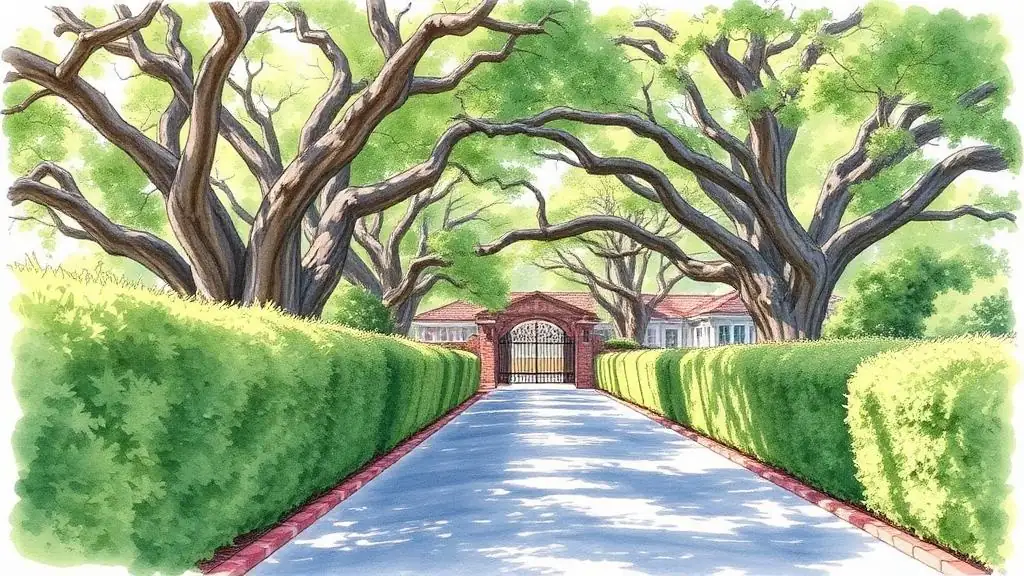
Atherton ground-up homes are reviewed by the Town of Atherton Building & Planning Department. The Town's one-acre minimum lot size, heritage-tree ordinance, strict privacy and bulk standards, and design review process make estate-home construction here a different exercise than Peninsula city work.
CSLB #1156772 · License & insurance details on request
Quick Answer
Atherton is a Town with its own building department — not the County and not the City of Menlo Park. A serious Atherton feasibility confirms zoning (R-1A is the dominant district), allowable floor area on a one-acre+ lot, heritage-tree exposure, basement and accessory-structure rules, and the architectural and site development permit path. Estate-home budgets and timelines are not a Peninsula city analog.
Who this is for
- Owners planning an estate-class custom home on a one-acre+ Atherton parcel.
- Buyers under contract on an Atherton lot needing pre-close feasibility.
- Owners coordinating with an architect on a long-horizon estate program.
- Owners weighing reuse of an existing estate vs a full rebuild.
Who reviews new construction in Atherton?
Atherton is the Town of Atherton. Planning, plan-check, building permits, and inspections run through the Town's Building & Planning Department. San Mateo County does not review in-Town parcels, and Menlo Park does not either — Atherton runs its own rulebook.
Atherton's primary residential district is R-1A (one-acre minimum). Floor-area ratios, height limits, accessory structure rules, basement allowances, and setback geometry all sit inside the Town's municipal code, not a county rule. Site Development Permits, Heritage Tree Permits, and Architectural Review are common gates.
What ground-up projects suit Atherton
New estate custom homes
Ground-up homes on one-acre+ parcels, typically with substantial accessory structures, pool and pool house, and structured landscape.
Teardown rebuilds
Removal of an aging estate followed by a current-code ground-up replacement under contemporary design standards.
Major addition + reconfiguration
Reuse of an existing primary structure with significant reconfiguration where trees or owner preference constrain a full rebuild.
Accessory structures with the primary
Pool houses, guest structures, garages — coordinated as one program with the primary residence.
Local constraints that shape Atherton budgets and schedules
Atherton's heritage-tree ordinance is enforced and covers a broad species list and any tree above set size thresholds. Heritage trees often define site planning at the master-plan stage; they cannot be designed around as an afterthought.
Privacy, view, and bulk standards constrain second-story geometry and window placement near property lines; the Town's review process scrutinizes these elements. Site Development Permits address grading, drainage, retaining, and pool/accessory siting.
Construction-hour ordinances, neighbor staging protections, and right-of-way constraints (some Atherton streets are private or shared) shape logistics. Crane and oversize-delivery planning belongs in preconstruction, not in the field.
Cost factors specific to Atherton
Estate-class finish stack — kitchens, baths, millwork, smart-home, and AV coordination drive per-sq-ft well above Peninsula custom-home baselines.
Heritage-tree protection (root-zone fencing, arborist monitoring, hand-dug foundations) is routine on Atherton parcels.
Basement scope — Atherton estate homes frequently include conditioned basements for wine, gym, theater, or staff space; basement cost is meaningful.
Privacy, security, gating, and perimeter improvements as part of base scope.
Architect and consultant coordination — long-horizon estate design with multiple specialty consultants.
Permit and timeline reality in Atherton
Atherton estate-home timelines are measured in years, not months. Design and entitlements (Site Development Permit, Heritage Tree Permit, Architectural Review) typically take a meaningful portion of a year by themselves, and construction of a true estate home commonly runs 18–30+ months depending on scope.
A clean, complete first submittal that addresses heritage trees, drainage, privacy, and grading reduces back-and-forth meaningfully.
Engineering you will actually need
Geotechnical and drainage reports — even nominally flat estate parcels require careful drainage and grading design.
Arborist report and heritage tree-protection plan.
Title 24 Part 6 energy compliance under the 2025 code; estate envelopes often pursue performance above baseline.
Structural and seismic design for basement structures, large open spans, and lateral systems.
Civil and landscape coordination for grading, stormwater detention, and septic/sewer constraints where applicable.
Risks and bottlenecks unique to Atherton
Heritage trees define the site plan
Designing around them late forces re-engineering. Survey trees first.
Private-street and shared-driveway access
Easements and shared infrastructure can constrain construction logistics; document early.
Owner-architect-builder alignment
Long-horizon estate programs need ruthless communication discipline. Misalignment late is expensive.
Privacy review iteration
Window and balcony adjustments late require structural changes.
Frequently asked questions
- Does the Town of Atherton or San Mateo County review my project?
- Town of Atherton. In-Town parcels go through the Town's Building & Planning Department — the County does not review in-Town Atherton parcels.
- What is the minimum lot size in Atherton?
- Atherton's primary residential zoning is R-1A with a one-acre minimum lot size. Floor-area ratio, height, and accessory structure rules sit inside the Town's municipal code.
- How long does an Atherton estate home take?
- Plan in years, not months. Design and entitlements typically take a meaningful portion of a year; estate-home construction commonly runs 18–30+ months depending on scope, basement, and accessory structures. Feasibility tightens the range to your program.
- How much does an Atherton estate home cost?
- Estate-class budgets are driven by finish stack, basement scope, consultant breadth, and site improvements as much as by square footage. Per-sq-ft ranges sit well above Peninsula custom baselines. We tighten ranges during feasibility — see /new-construction/cost and /new-construction/luxury-homes.
- Are heritage trees a hard constraint?
- Often yes. Removal requires a Heritage Tree Permit and typically replacement planting, and protected trees frequently define foundation and accessory siting. Site-plan around the trees, don't ask them to move.
- Can I build a finished basement in Atherton?
- Atherton estate homes commonly include conditioned basements. Allowable basement scope is governed by the Town's code; basement floor area, light wells, and ceiling-height treatment matter for the FAR calculation. Confirm in feasibility.
- Why do Atherton estate projects need an early review of trees and setbacks?
- Atherton's residential zoning enforces large setbacks, FAR limits, and heritage-tree rules on its one-acre estate lots. Resolving tree, setback, and FAR constraints during feasibility avoids late-stage architectural redesigns once Town review begins.
Official sources
- Town of Atherton — Building & Planning ↗
Town of Atherton
Authoritative permit, plan-check, heritage tree, and architectural review portal.
- Town of Atherton — Municipal Code ↗
Town of Atherton
Zoning, FAR, heritage tree, and Site Development Permit ordinances.
- California Energy Commission — 2025 Energy Code ↗
California Energy Commission
Statewide Title 24 Part 6 baseline effective for permits filed on/after January 1, 2026.
- California Building Standards Commission ↗
California Department of General Services
California Building Standards Code (Title 24) adoption and amendment authority.
- Bay Area Air Quality Management District — J-Number / Asbestos ↗
BAAQMD
Demolition notification and asbestos NESHAP requirements for Bay Area teardowns.
Related pages
- Bay Area regional context for Atherton →
Nine-county Bay Area permit patchwork.
- Estate-class scope for Atherton custom homes →
Finish stack and consultant breadth.
- Custom-home delivery on Atherton one-acre lots →
Design-build for one-off estate delivery.
- Atherton teardown-rebuild on estate lots →
Demo + new home on an existing estate lot.
- Atherton estate cost ranges and drivers →
2026 ranges with named drivers.
- Town of Atherton permit-path expectations →
Realistic schedule, feasibility through C of O.
Plan an Atherton estate-home feasibility around Town review and heritage trees
We start every ground-up engagement with a written preconstruction feasibility review — before any contract is signed.
Plan an Atherton estate-home feasibility around Town review and heritage trees